4 Most Durable Hiking Shoes in 2026
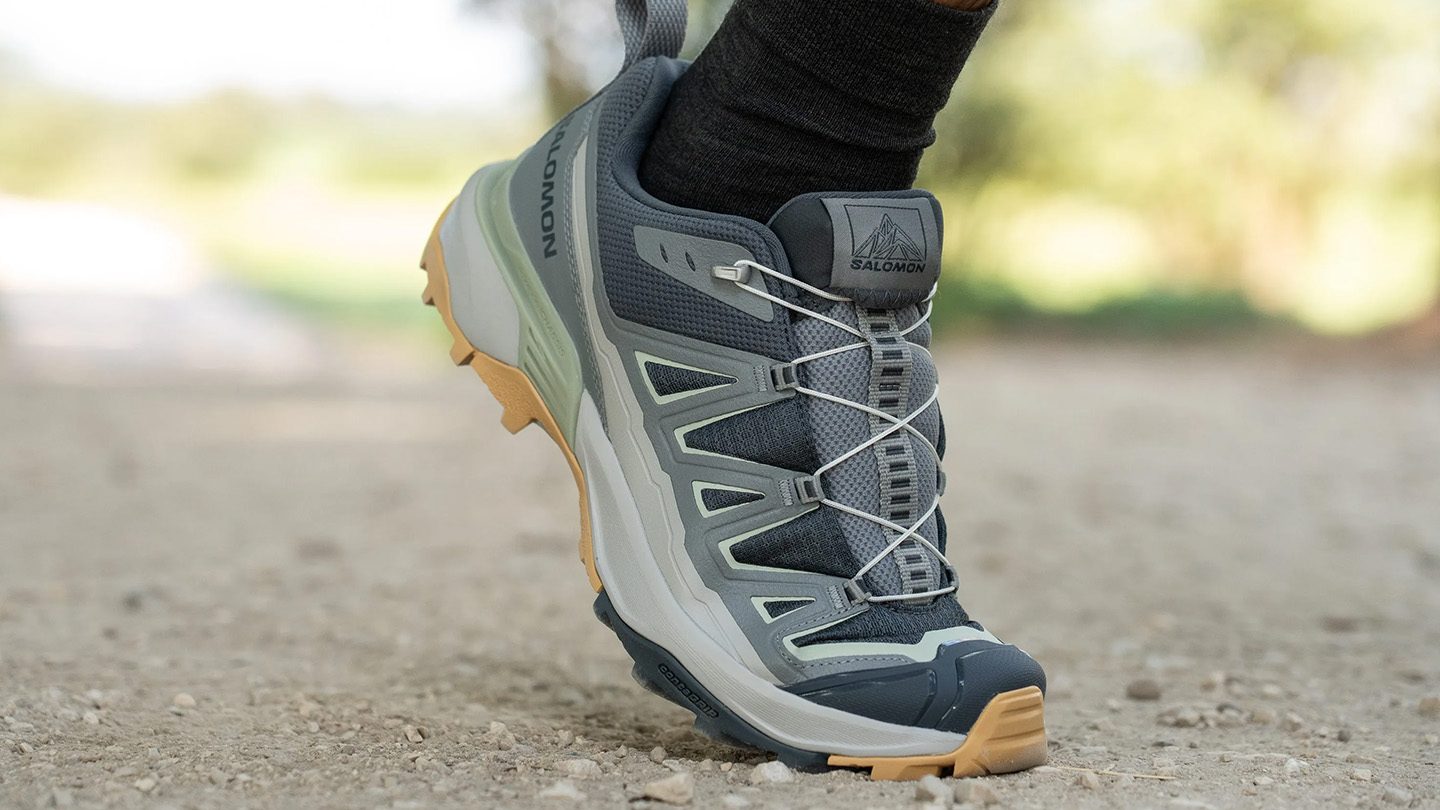
Durability is a very important topic, and it feels like it’s even more important in hiking than, say, jogging or walking. Hiking shoes falling apart, an upper rupturing, or any other similar event is an inconvenience when you’re walking around the city, but a quite dangerous thing to happen if you’re somewhere 10,000ft high or in the middle of the forest, on a very steep, technical trail covered with sharp rocks and roots. On top of that, we all want to know whether the money we’re investing in a pair of hiking shoes is worth it! That’s where our lab comes in; thanks to the extensive testing, we can proudly highlight hiking shoes that have performed the best on the durability tests and the trails.
 Adidas Terrex Free Hiker 2.0 Low GTX
 Lems Trailhead
 Salomon X Ultra 360 Edge
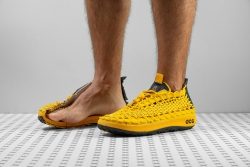 Nike ACG Watercat+
How we test Most durable hiking shoes
We run an independent shoe lab, which allows us to test all the shoes in the same way (standardized testing) and publish unbiased results. Brands don’t dictate what we write and publish; it’s all about the shoe and how it performs, be it in the lab or on the trails.
We buy hiking shoes with our own money and cut them in half and into pieces so that we can measure their durability and other features like traction, shock absorption, stiffness, lug thickness, etc. We also do all of that at constant temperature and humidity levels.
Once done with testing, we publish hiking shoe reviews and all the lab data. Hiking shoes that have scored the highest are selected as best picks in various categories.
Best durable hiking shoes overall
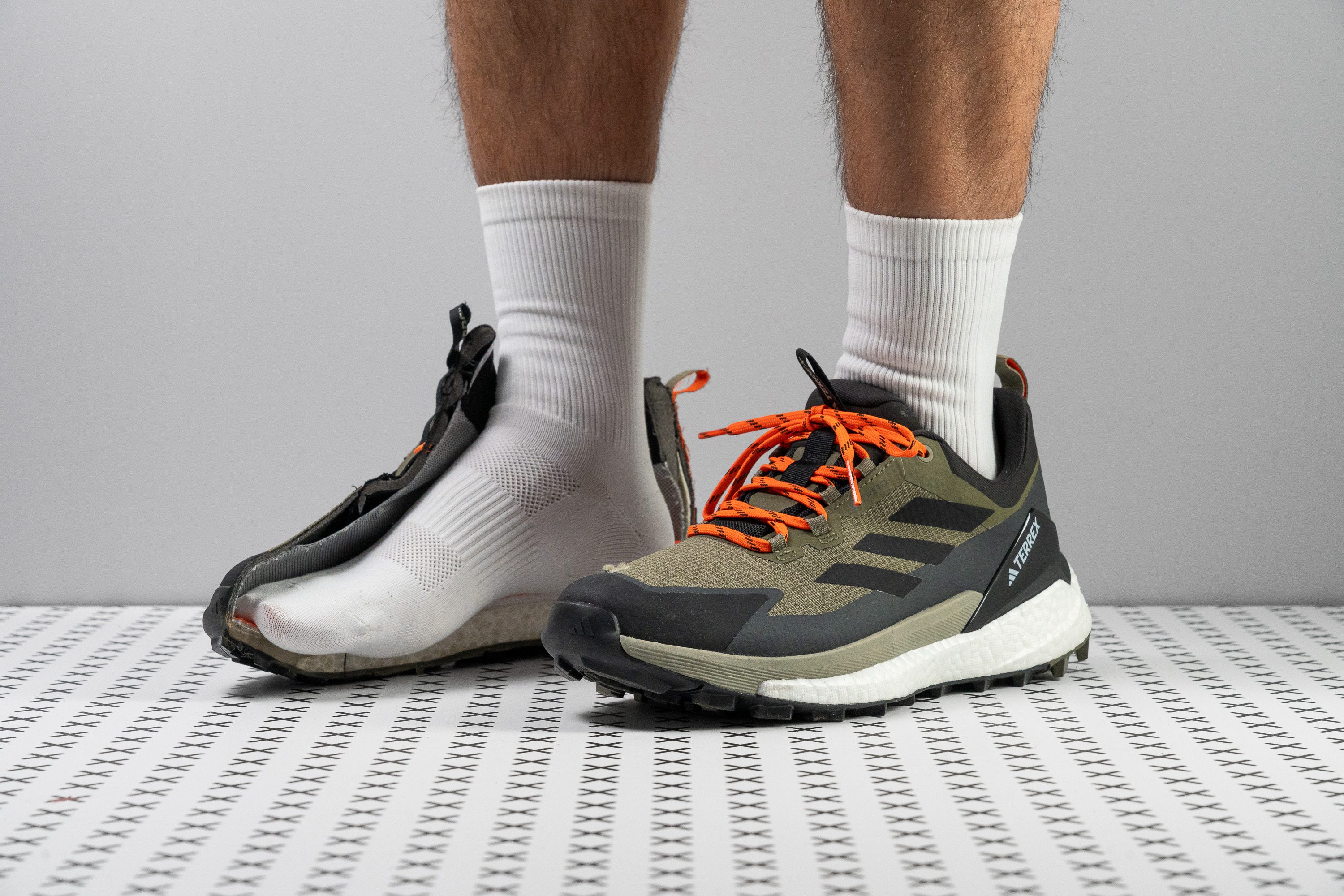
What makes it the best?
Pros
- Well-cushioned and responsive
- A ton of impact protection
- Rockered sole makes the ride smoother
- Barely gets firmer in low temperatures
- Excellent support and side-to-side stability
- Top-notch waterproofing
- Highly durable (especially the outsole)
- Ideal grip for technical terrain
- Sustainable materials (20%)
Cons
- Much heavier than average
- TPU heel clips may cause rubbing
Full review of Adidas Terrex Free Hiker 2.0 Low GTX
Best durable hiking shoes for easy hikes
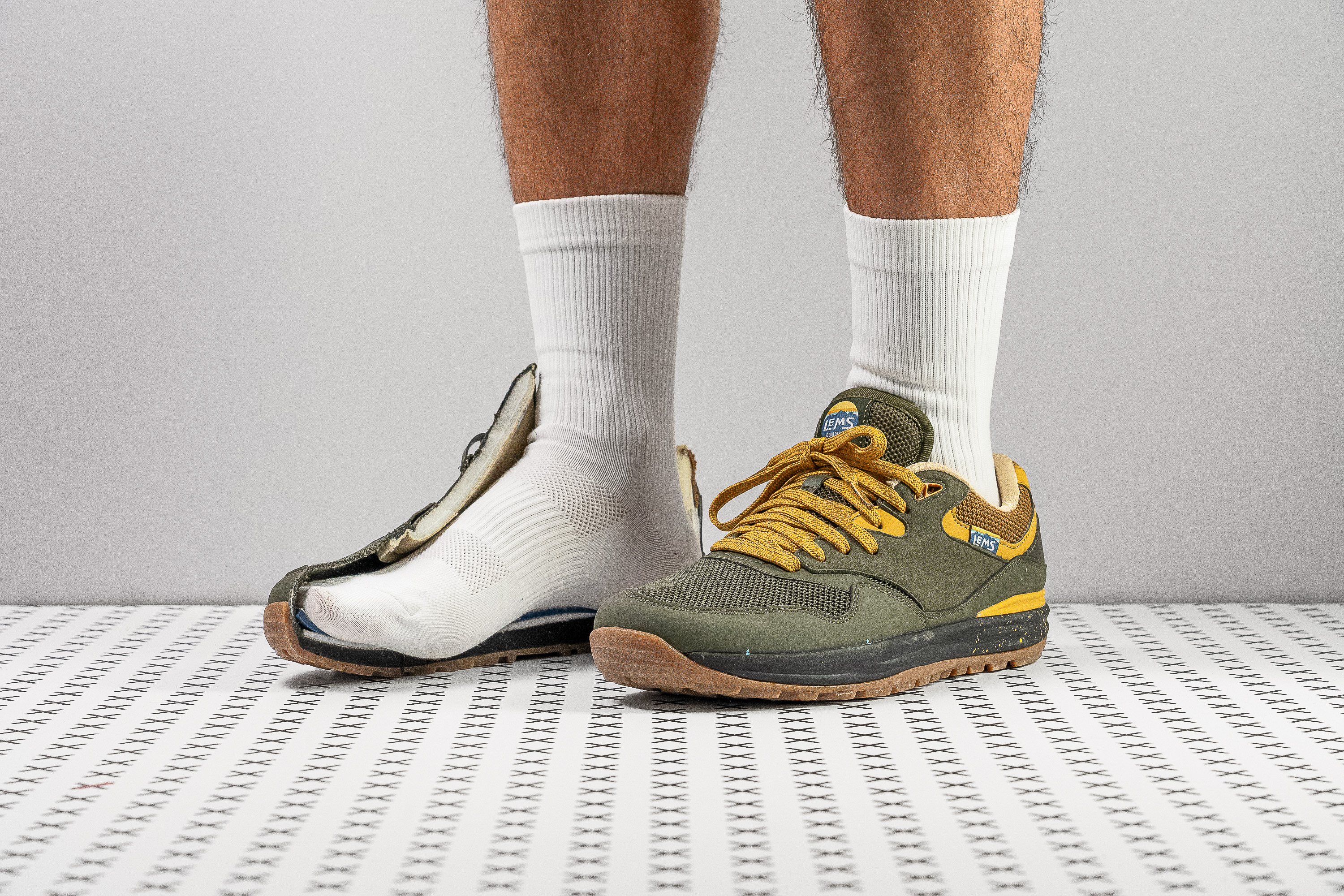
What makes it the best?
Pros
- Perfect trail-to-city shoe
- Notably lighter than average
- Wear-resistant upper and outsole
- Grounded platform
- Low heel-toe drop confirmed
- Very flexible construction
- Upper follows natural foot shape
- Great grip for moderate terrain
- Vegan materials (in most colorways)
- Perfect for mild demi-season weather
Cons
- Not for wide feet
- Tongue slides sideways
- Not for warm weather
Full review of Lems Trailhead
Best versatile and durable hiking shoes
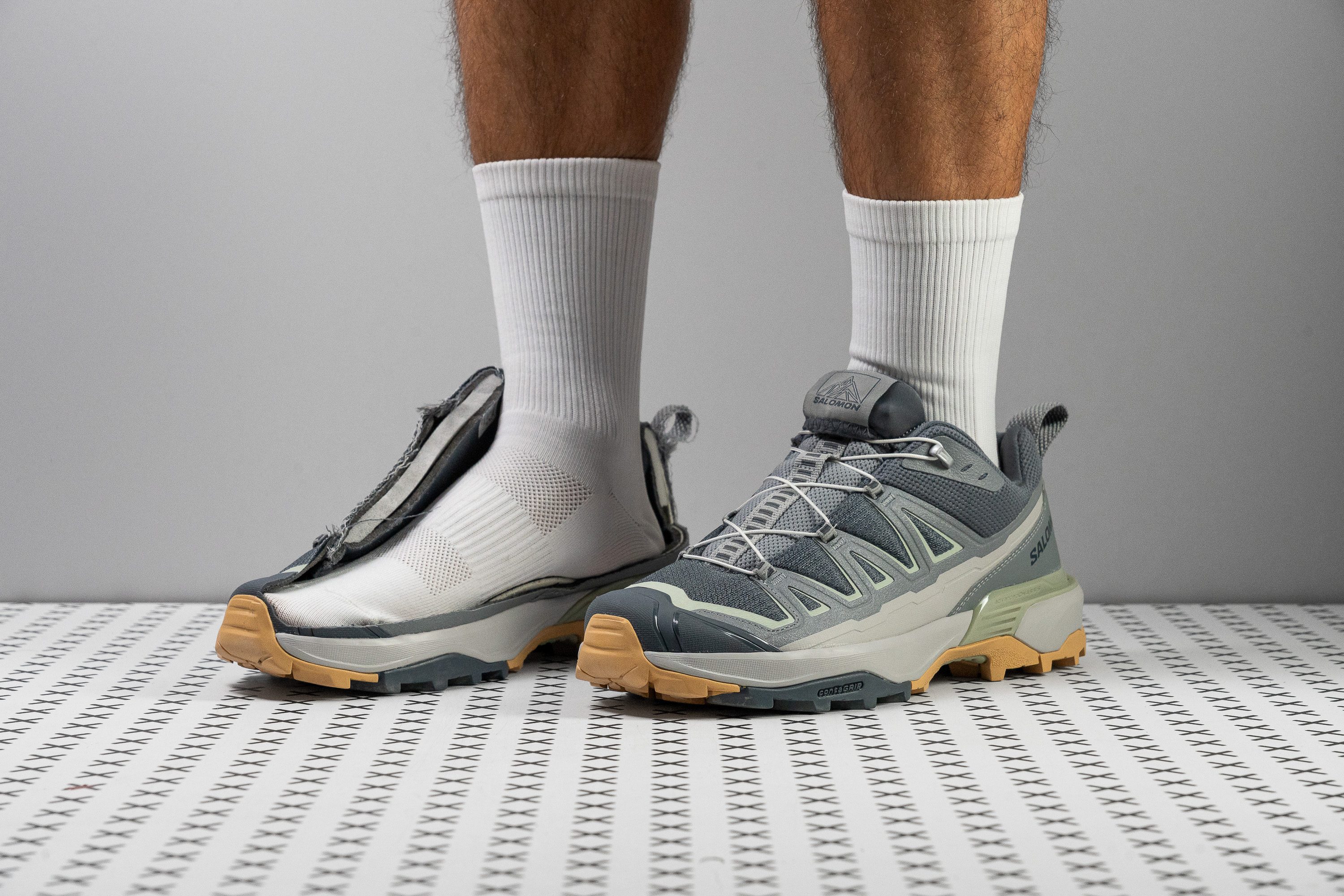
What makes it the best?
Pros
- Grounded and trail-connected
- Great lateral stability and support
- Fantastic traction on various terrains
- Excellent wear-resistance and durability
- Easy fit regulation with Quicklace
- Decent breathability for summer hikes
- Generously padded upper
Cons
- Not much shock absorption
- Not for wide feet
- Gets even firmer in cold
Full review of Salomon X Ultra 360 Edge
Best durable water hiking shoes
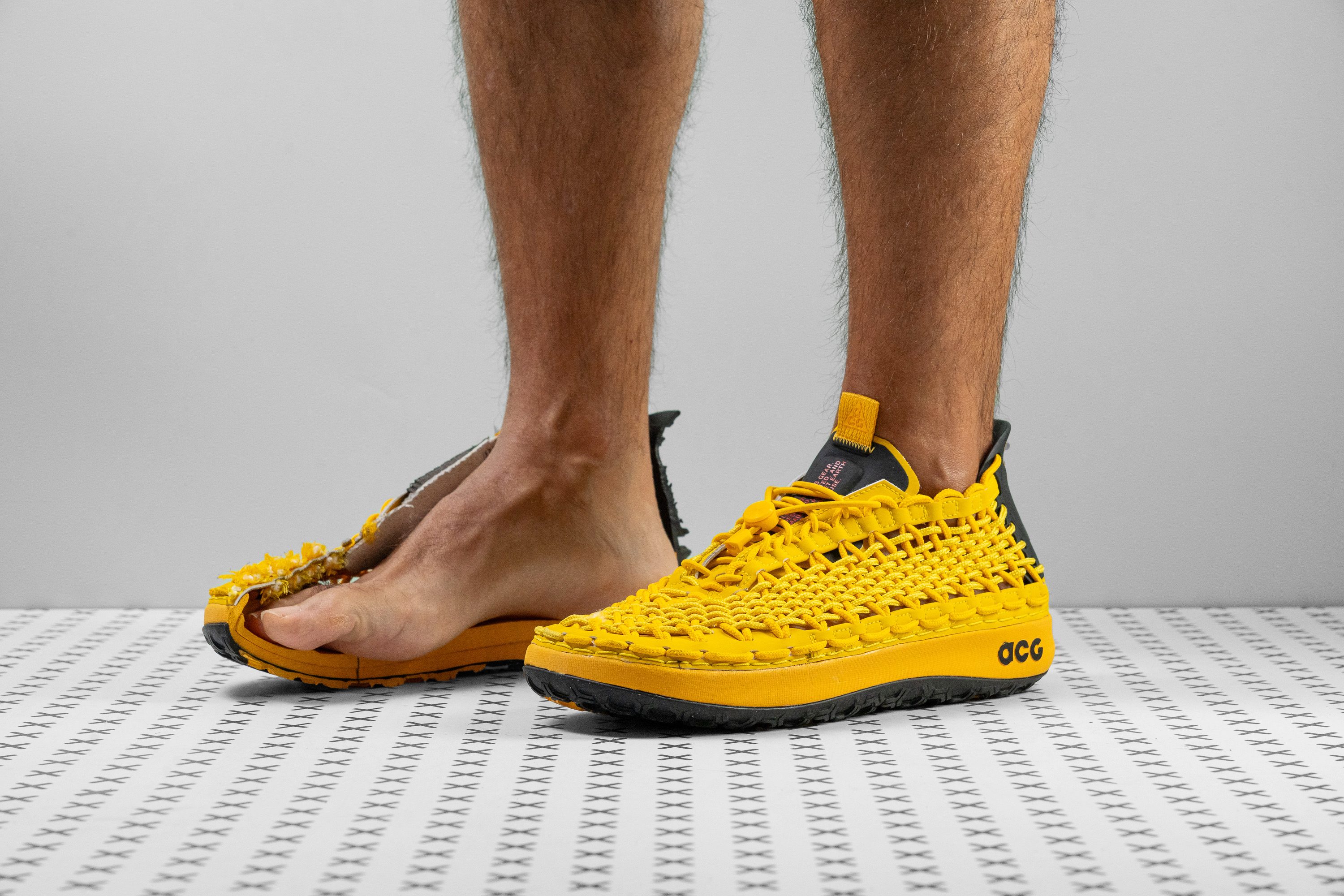
What makes it the best?
Pros
- Outstanding water drainage
- Immensely breathable
- Excellent abrasion resistance
- Very light on foot
- Amazingly grippy on wet
- Very grounded platform
- Bends along with the foot
- Adaptable fit with a roomy toebox
- Easy on-and-off
- Comfy in-shoe feel
- Bold aesthetics
Cons
- No arch or ankle support
- Catches debris and small pebbles easily
Full review of Nike ACG Watercat+
Comparison of the 4 most durable hiking shoes
 Adidas Terrex Free Hiker 2.0 Low GTX Adidas Terrex Free Hiker 2.0 Low GTX |
 Lems Trailhead Lems Trailhead
|
 Salomon X Ultra 360 Edge Salomon X Ultra 360 Edge
|
 Nike ACG Watercat+ Nike ACG Watercat+
|
||
|---|---|---|---|---|---|
| Best |
Overall
|
For easy hikes
|
Versatile
|
For water hiking
|
|
| Audience score |
89
Great!
|
92
Superb!
|
70
Decent!
|
83
Good!
|
|
| Price |
$180
|
$140
|
$135
|
$125
|
|
| Trail terrain |
Snow / Icy terrainVersatile / Moderate terrainRocky / Technical terrainMud / Soft ground
|
Light terrain
|
Versatile / Moderate terrain
|
Light terrain
|
|
| Shock absorption |
High
|
–
|
Low
|
Low
|
|
| Energy return |
High
|
–
|
Moderate
|
High
|
|
| Weight labWeight brand | 15.7 oz / 445g15.7 oz / 445g | 11.9 oz / 337g11.7 oz / 332g | 13.5 oz / 383g12.8 oz / 363g | 12.7 oz / 359g | |
| Lightweight | ✗ | ✓ | ✓ | ✓ | |
| Breathability |
Warm
|
Moderate
|
Moderate
|
Breathable
|
|
| Use |
Day Hiking
|
Day HikingUrban hiking
|
Day Hiking
|
Water hiking
|
|
| Orthotic friendly | ✓ | ✓ | ✓ | ✓ | |
| Drop lab | 12.6 mm | 5.4 mm | 10.2 mm | 4.7 mm | |
| Size |
True to size
|
True to size
|
–
|
True to size
|
|
| Midsole softness |
Soft
|
Firm
|
–
|
–
|
|
| Difference in midsole softness in cold |
Small
|
Small
|
Normal
|
Normal
|
|
| Torsional rigidity |
Stiff
|
Flexible
|
Stiff
|
Flexible
|
|
| Heel counter stiffness |
Moderate
|
Flexible
|
Moderate
|
Flexible
|
|
| Stiffness |
Stiff
|
–
|
Moderate
|
Flexible
|
|
| Outsole hardness |
Average
|
Average
|
–
|
Average
|
|
| Waterproofing |
Waterproof
|
–
|
–
|
–
|
|
| Material |
Mesh
|
Mesh
|
–
|
–
|
|
| Season |
Winter
|
All seasons
|
All seasons
|
SummerAll seasons
|
|
| Toebox durability |
Good
|
Good
|
Good
|
Very good
|
|
| Heel padding durability |
Decent
|
Good
|
Decent
|
Good
|
|
| Outsole durability |
Good
|
Good
|
Decent
|
Good
|
|
| Width / fit |
Medium
|
Narrow
|
Medium
|
Wide
|
|
| Toebox width |
Narrow
|
Medium
|
Medium
|
Wide
|
|
| Lug depth | 6.7 mm | 3.0 mm | 4.5 mm | 2.7 mm | |
| Heel stack lab | 37.2 mm | 27.1 mm | 29.1 mm | 22.0 mm | |
| Forefoot | 24.6 mm | 21.7 mm | 18.9 mm | 17.3 mm | |
| Widths available |
Normal
|
Normal
|
Normal
|
NormalWide
|
|
| Technology |
Gore-Tex
|
–
|
Ortholite
|
–
|
|
| Heel tab |
Finger loop
|
None
|
Finger loop
|
Pull tab
|
|
| Removable insole | ✓ | ✓ | ✓ | ✓ | |
| Ranking |
#7Top 20%
|
#2Top 6%
|
#34Bottom 2%
|
#22Bottom 37%
|
|
| Popularity |
#2Top 6%
|
#20Bottom 42%
|
#19Bottom 45%
|
#25Bottom 28%
|
What is durability in hiking shoes and how to use our lab data
The durability of hiking shoes depends on many factors. We may think that if the materials used are high-quality, that’s enough. But it’s not. The way the materials are cut, treated, glued, or stitched together also plays a significant role. This story can not only be about making sure the hiking shoe you pay X amount of dollars for is well worth the investment. It’s also about how many hiking shoes you need, buy, and throw away. Keep in mind that 20 billion pairs of (all sorts of) shoes are purchased every year (Wang et al., 2012).
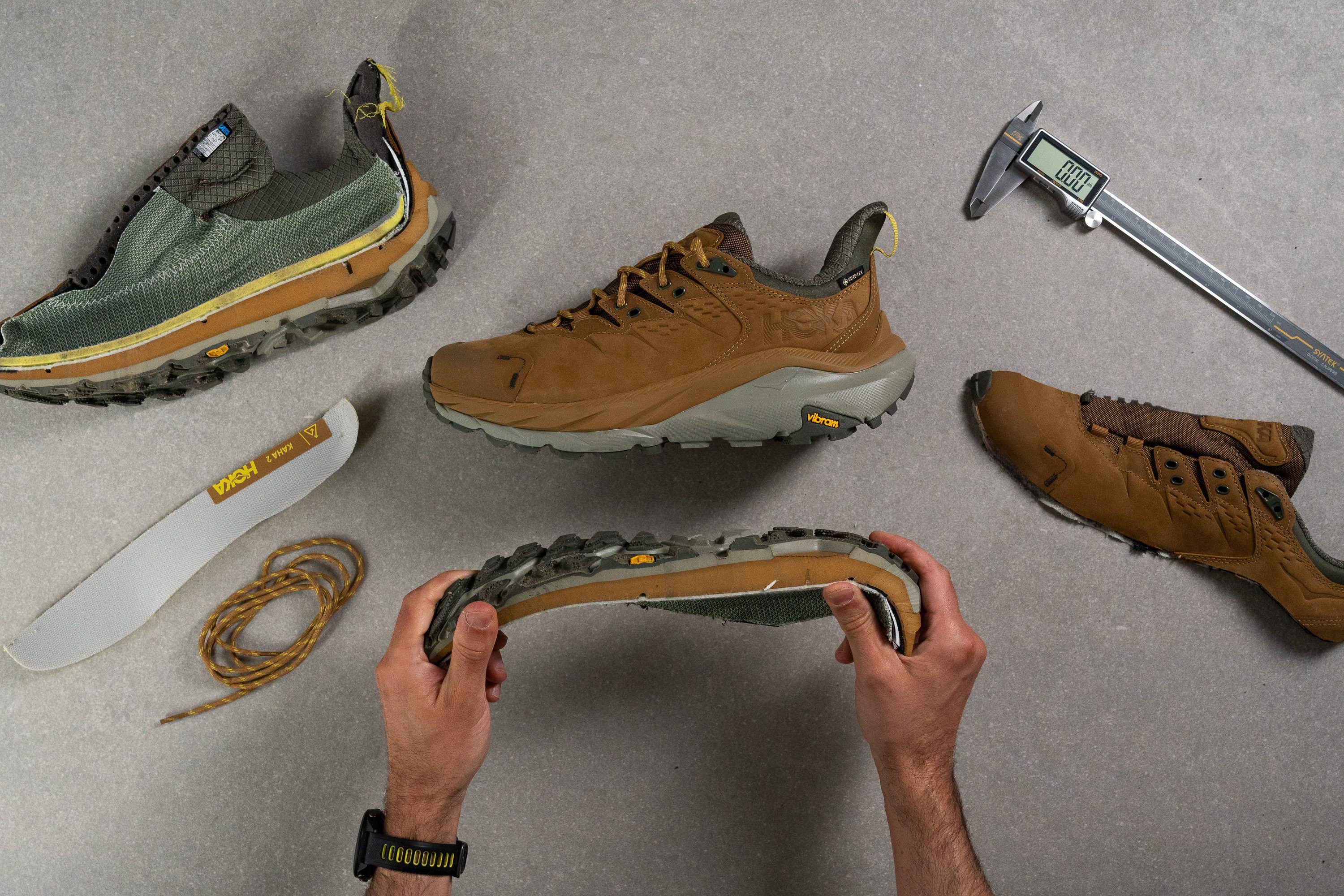
The durability of hiking shoes in our lab is examined by performing 3 lab tests: toebox durability, heel padding durability, and outsole durability. If you’re interested in toebox or heel padding durability, look for the highest ratings (5/5). When it comes to the outsole durability, look for the lowest test results, as they tell us how deep the dent was post-test.
| Best-rated durable hiking shoes | ||
|---|---|---|
| Name | Trail terrain | Audience score |
| Lems Trailhead | Light terrain |
92
Superb!
|
| Adidas Terrex Free Hiker 2.0 Low GTX | Rocky / Technical terrain, Mud / Soft ground / Versatile / Moderate terrain / Snow / Icy terrain |
89
Great!
|
| KEEN NXIS Speed | Rocky / Technical terrain / Versatile / Moderate terrain |
84
Good!
|
| Nike ACG Watercat+ | Light terrain |
83
Good!
|
Looking at the scientific research, it’s difficult to present all the findings because there are different durability testing methods out there, and many of them do not replicate the real-life hiking conditions. They can be somewhat relatable, but that’s often not enough for a systematic overview.
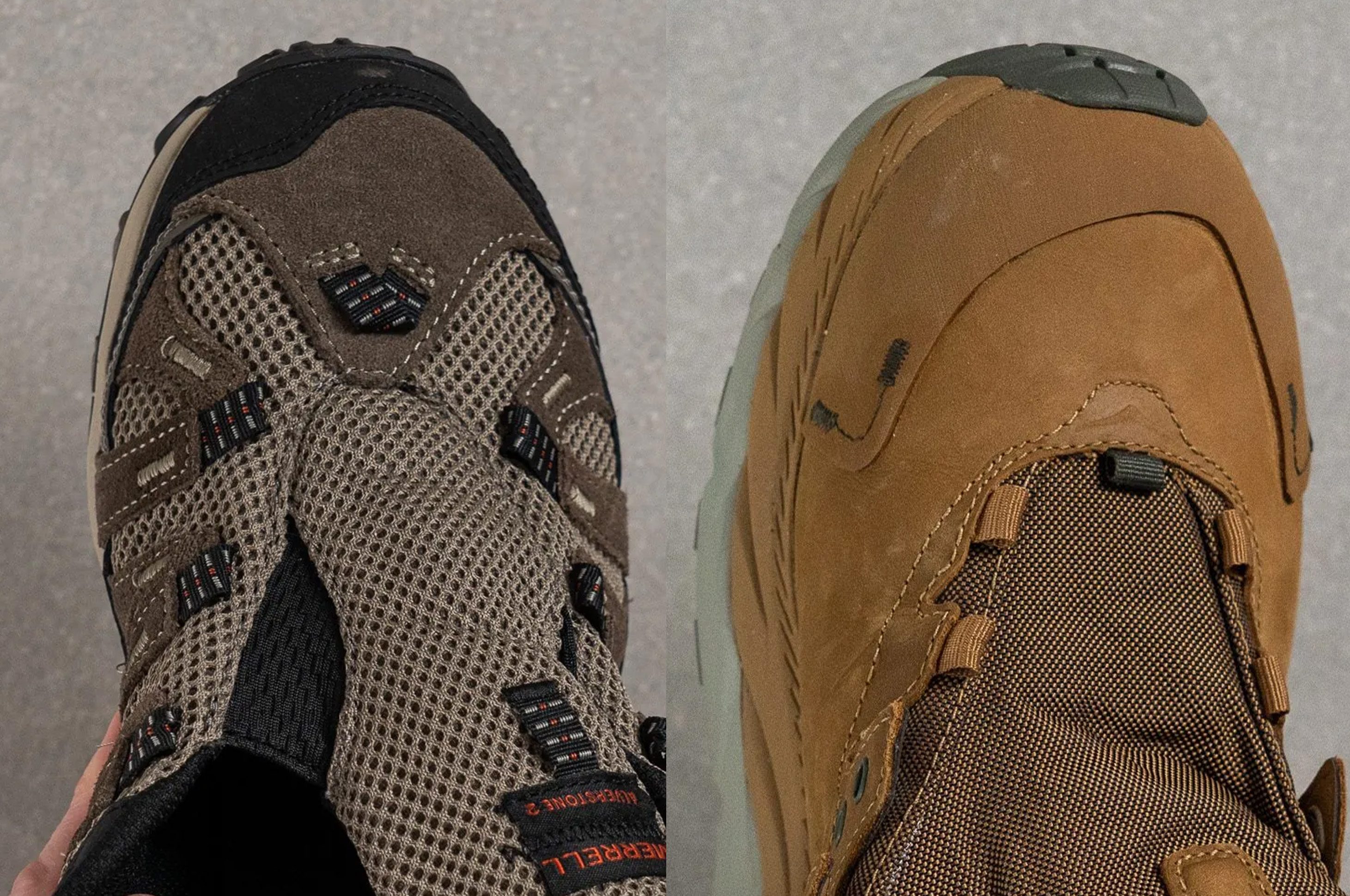
Our practical experience, lab data, and the overall consensus from the hiking community are that leather and suede uppers are more durable than other options (Cordura/nylon, mesh/textile, knit). Leather has other qualities that may not go well with your hiking needs: they are not breezy, they are not lightweight, and they may require some extra time for the leather to mold to the shape of your feet.
The great thing about lab testing is that we can see the durability of all 3 hiking shoe areas for each model, regardless of the materials and manufacturing processes used.
Most durable toeboxes in hiking shoes
Durability of the toebox in hiking shoes depends on a) how much protection there is (think toe bumpers) and b) the choice of upper material.
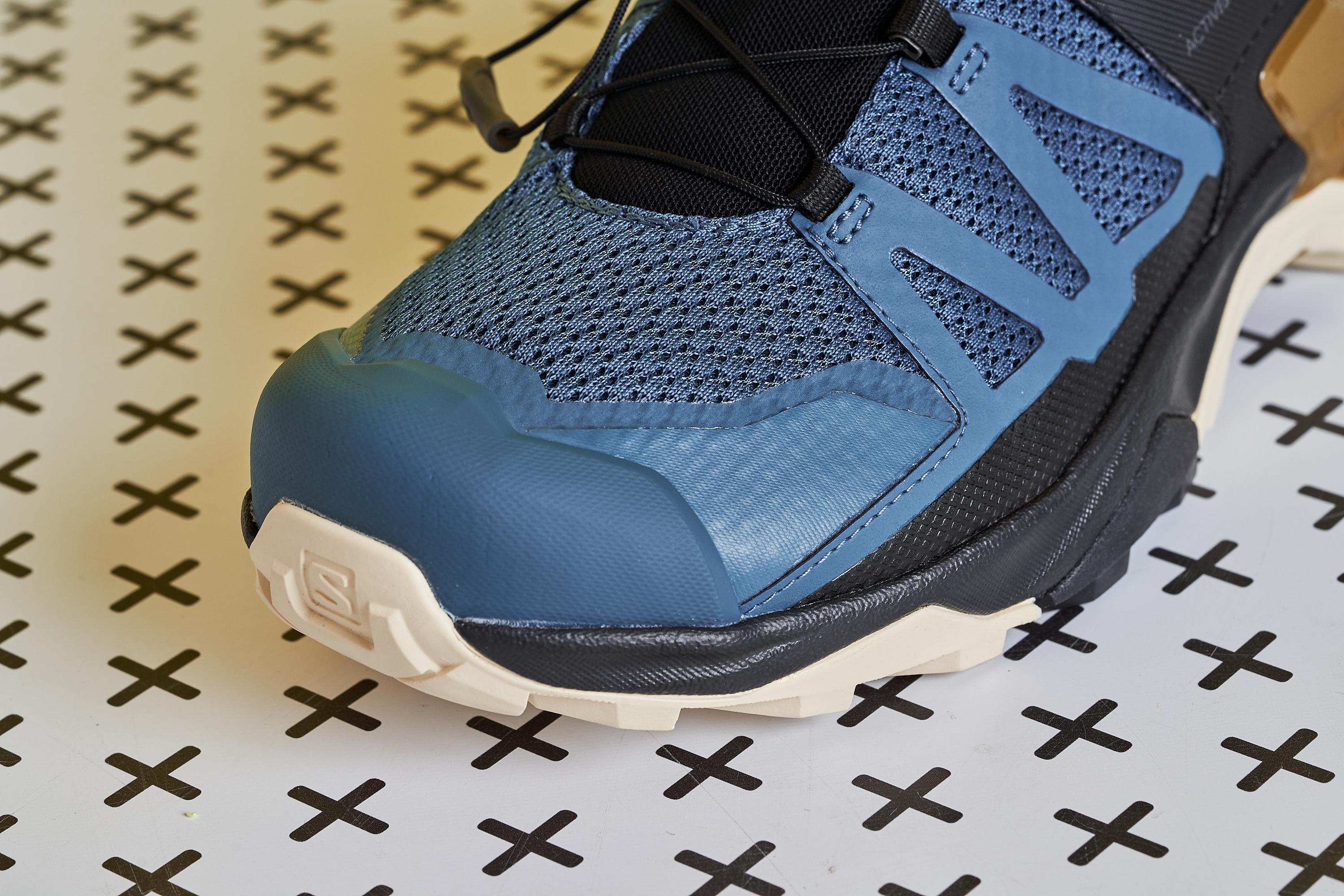
Toe bumpers are rubber overlays that are, by default, significantly more durable than any other upper made of textile or leather. And, looking at the upper materials, we also have significant variation there.
We test the toebox durability by pressing a Dremel against it using always the same force, time duration, and RPMs (rotation per minute). This way, all hiking shoes are treated the same, which makes the results comparable.
On this test, we assign each toebox a durability score on a 1-5 scale. 1/5 is assigned to the toeboxes that “don’t survive” the Dremel, meaning they end up with a visible hole. Dremel goes through all the layers, if there are more than 1. 5/5 is given to the toeboxes that barely get scratched (best durability)!
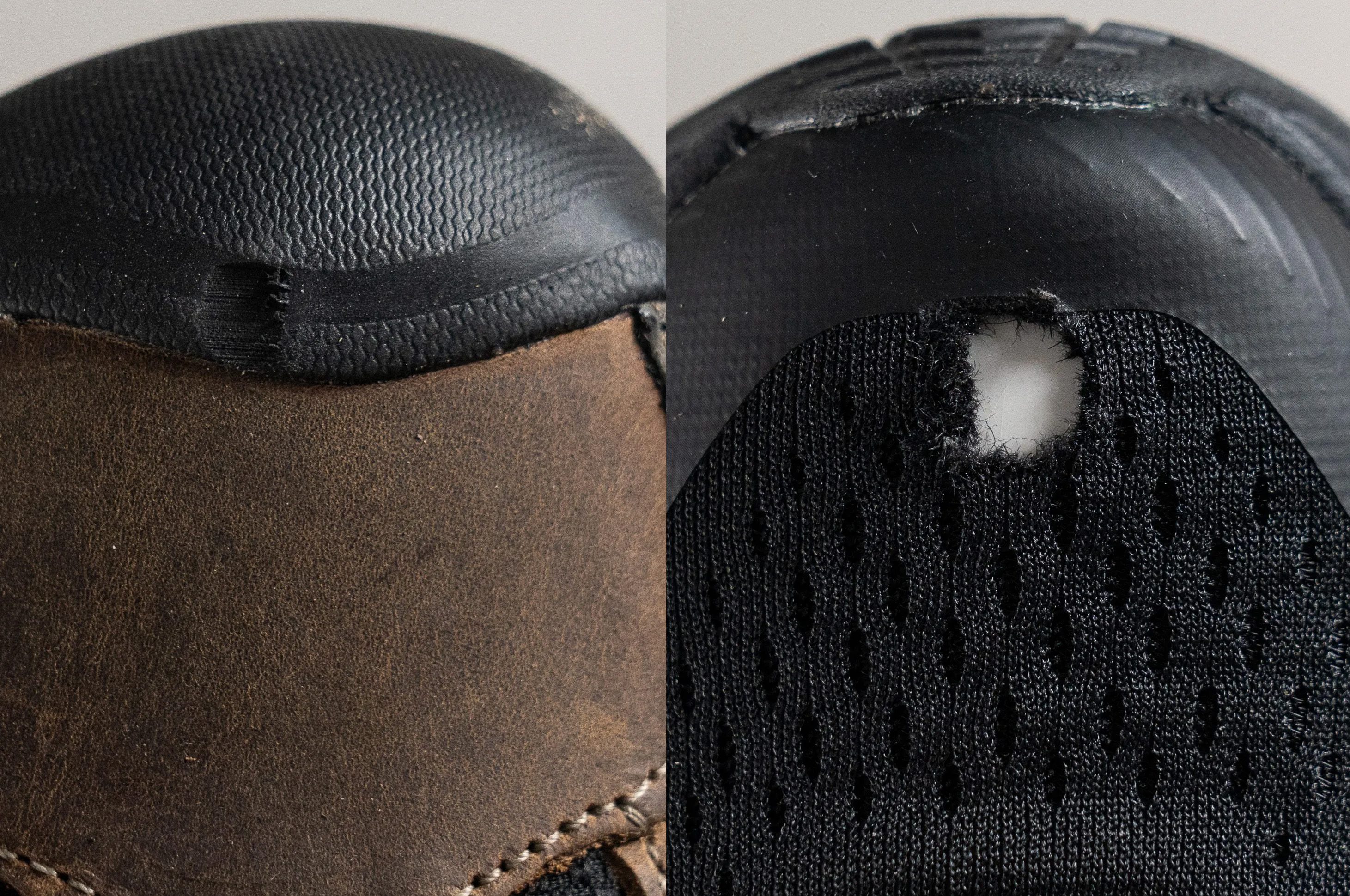
In general, lighter hiking shoes (usually very nimble and often made for fast and light adventures) have thinner and more breathable uppers, which are less durable. Thicker uppers, especially the leather ones, score higher on the durability tests. Let’s have a look.
| Upper material | Average toebox durability |
| Knit | 1.0/5.0 |
| Mesh | 3.6/5.0 |
| Leather | 4.3/5.0 |
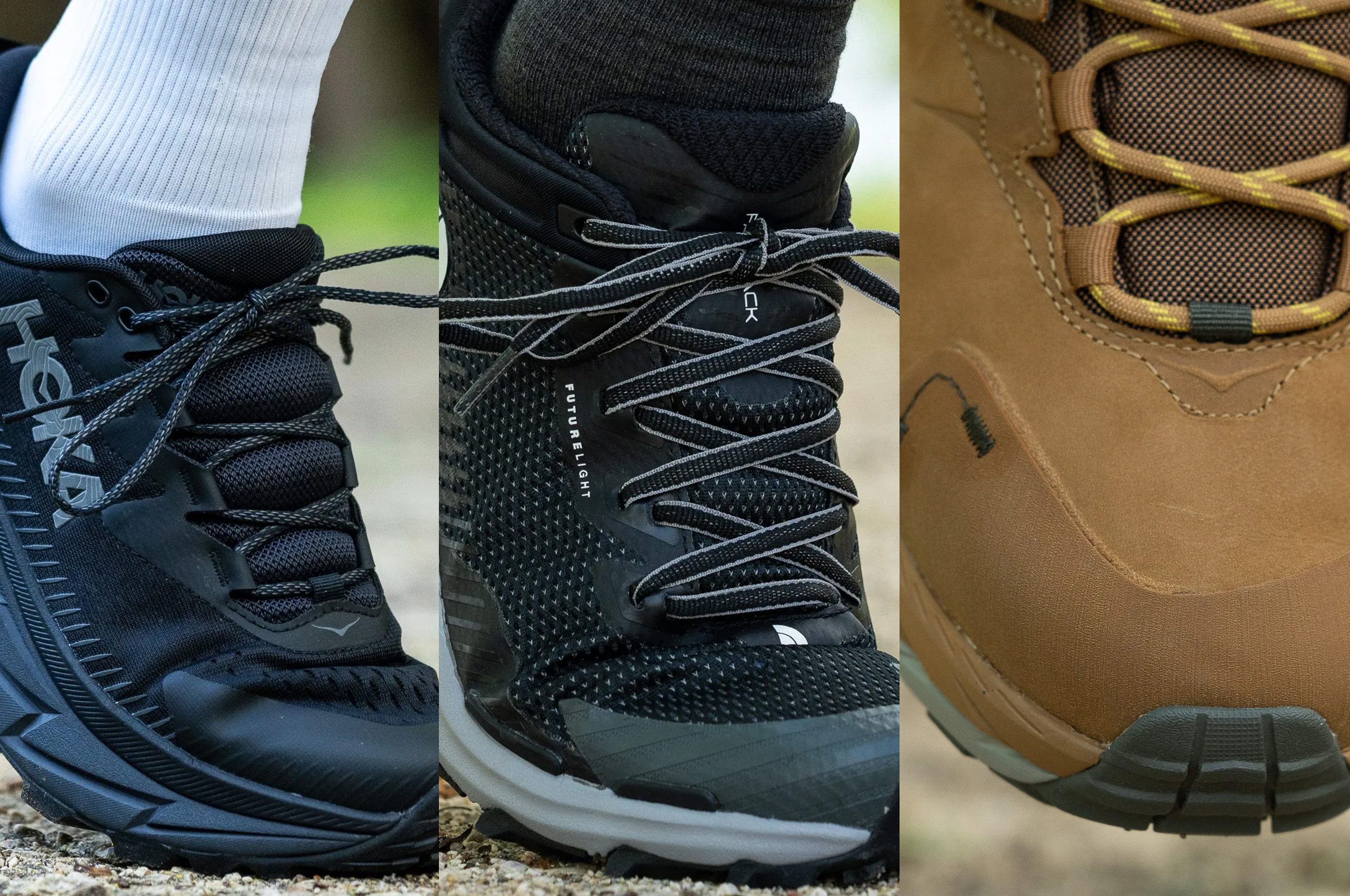
Leather and suede can actually look good when scuffed and worn; they can patina well and develop a unique aesthetic that way. No other upper material has that feature.
| Toebox durability (5/5 is the highest durability score) in durable hiking shoes | |
|---|---|
| Name | Toebox durability |
| Nike ACG Watercat+ | 5 |
| Lems Trailhead | 4 |
| Hoka Kaha 2 Low GTX | 4 |
| KEEN NXIS Speed | 4 |
| Adidas Terrex Free Hiker 2.0 Low GTX | 4 |
| Salomon X Ultra 360 Edge | 4 |
Heel padding durability in hiking shoes
Who usually worries about the durability of the material behind the heel? Hikers with Haglund’s deformity, with sensitive heels or unstable heels (especially overpronators) who love it when shoes give their heels good padded hugs, and hikers who don’t like to use a shoe horn, so they keep squishing and/or rubbing that area whenever they put the shoes on.
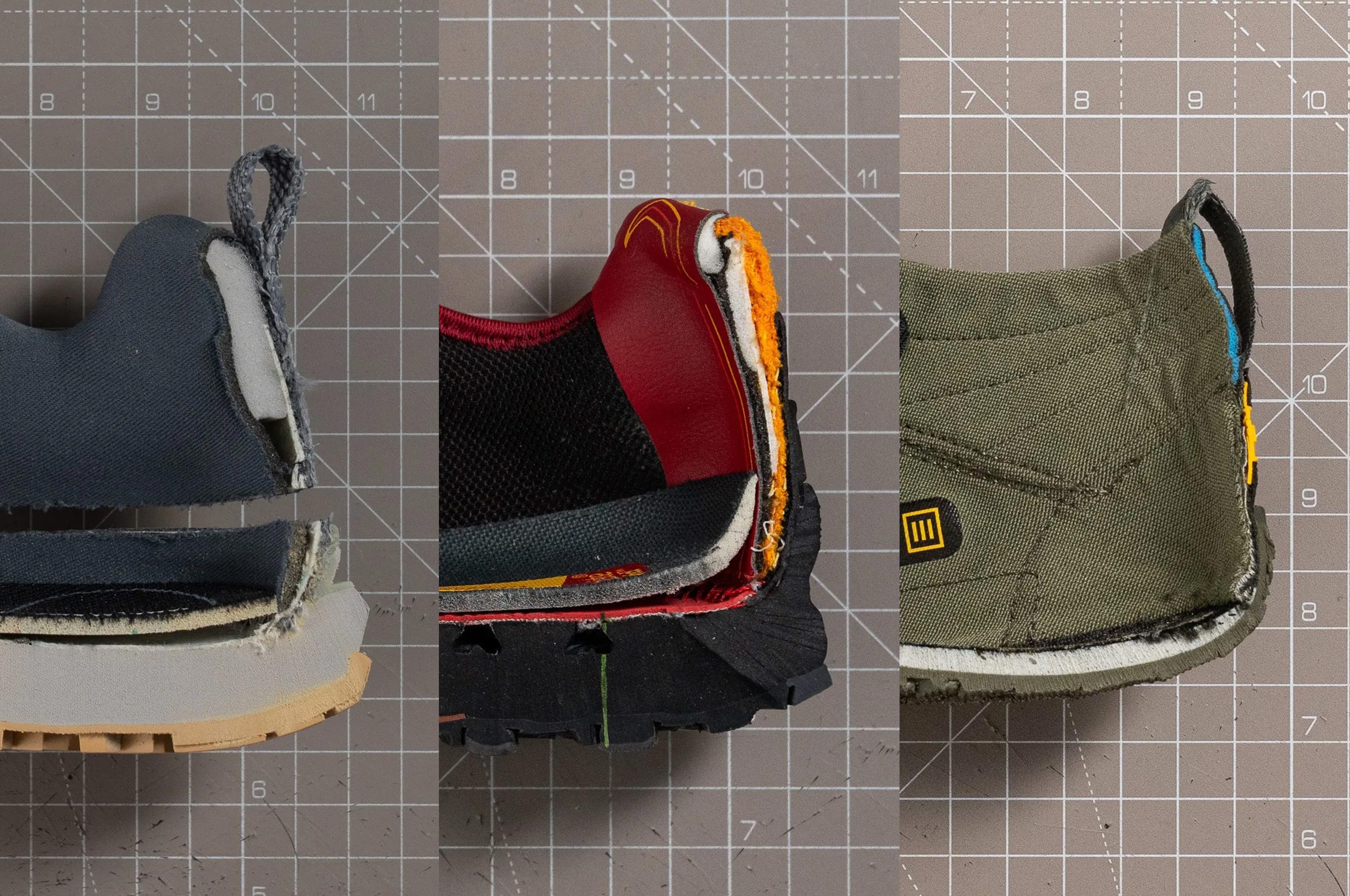
We test this area in the lab using a Dremel and, again, assign each hiking shoe a heel-padding durability score on a 1-5 scale, where 1/5 is the least durable and 5/5 the most. As you may suspect, we assign 1/5 only to the heel counters who get properly destroyed, as in, there’s a big hole that went through (usually) multiple layers.
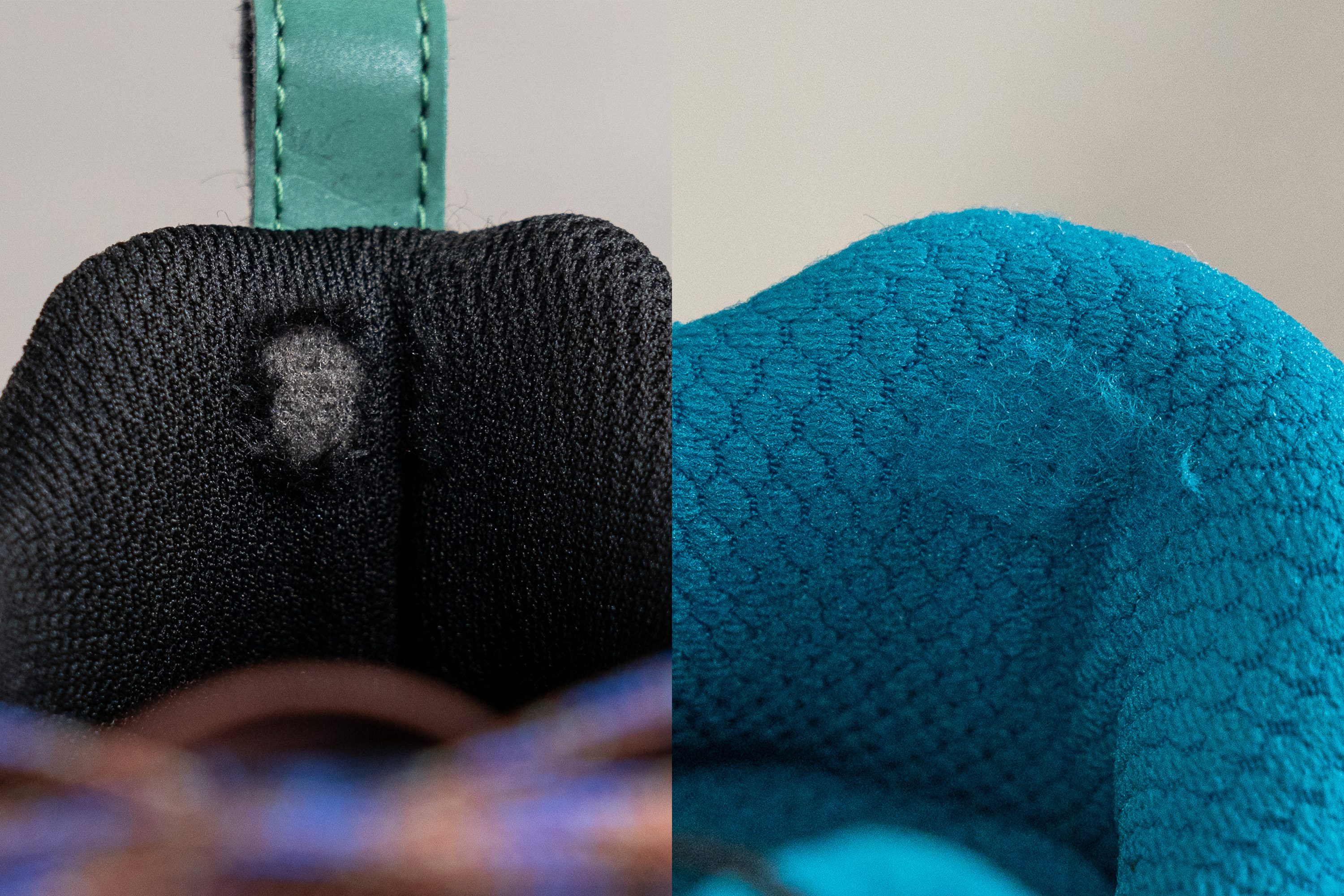
| Heel padding durability (5/5 is the highest durability score) in durable hiking shoes | |
|---|---|
| Name | Heel padding durability |
| Nike ACG Watercat+ | 5 |
| Lems Trailhead | 5 |
| Hoka Kaha 2 Low GTX | 5 |
| KEEN NXIS Speed | 3 |
| Adidas Terrex Free Hiker 2.0 Low GTX | 3 |
| Salomon X Ultra 360 Edge | 3 |
Most durable outsoles in hiking shoes
Now, testing for outsole durability may look the same because we also use a Dremel, but it is different in terms of how we measure the damage. No assessments this time! Rubber is hard, which means we can use proper instruments; in this case, it’s a tire tread gauge.
The thing with hiking shoes and their outsole durability is somewhat similar to running shoes. In road running, we have flat outsoles which, once eaten through, make shoes basically unusable because the exposed midsole offers no grip. Here, once the lugs are destroyed, you can’t use the hiking shoes on their intended terrain because, well, you’re out of lugs. You can rock the shoes casually in urban settings, but that’s a different topic.
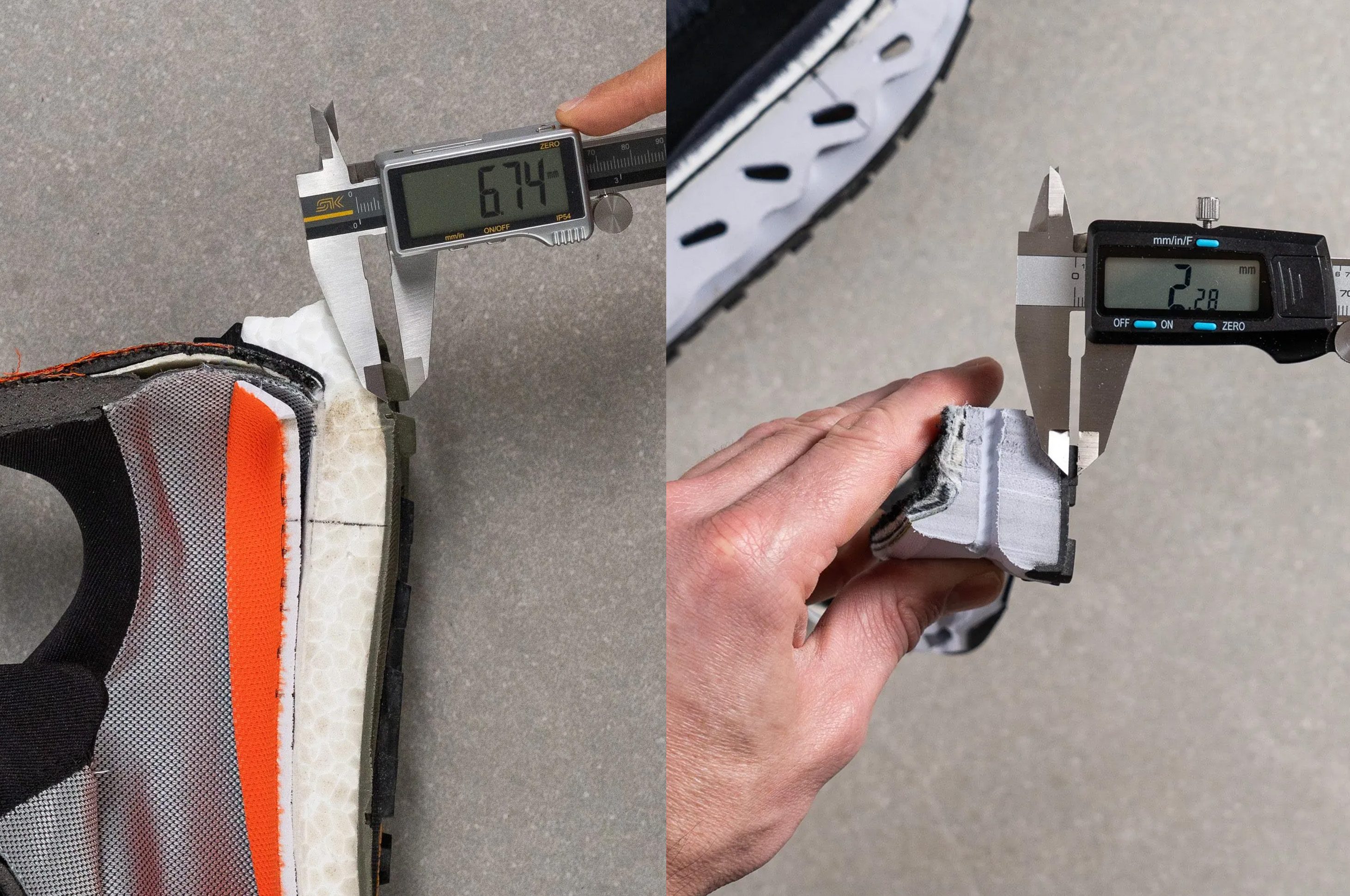
So, what we care about here is the lug thickness. The thicker the lugs, the better. If the Dremel can make a 2 mm dent in the rubber, your experience in such shoes will be significantly different if they have lugs that are 4.5 mm deep or 2 mm deep. It’s a 2.5 mm difference or the matter of having or not having lugs at all.
| Outsole durability (shallower dent = more durable outsole) in durable hiking shoes | ||
|---|---|---|
| Name | Outsole durability | Lug depth |
| Adidas Terrex Free Hiker 2.0 Low GTX | 0.4 mm | 6.7 mm |
| KEEN NXIS Speed | 0.5 mm | 4.0 mm |
| Hoka Kaha 2 Low GTX | 0.7 mm | 4.3 mm |
| Lems Trailhead | 0.7 mm | 3.0 mm |
| Nike ACG Watercat+ | 0.8 mm | 2.7 mm |
| Salomon X Ultra 360 Edge | 1.0 mm | 4.5 mm |
Now that we’ve gone through all 3 tests, we can look at all the shoes and their durabilty scores:
| Most durable hiking shoes: durability lab data overview | |||
|---|---|---|---|
| Name | Outsole durability | Heel padding durability | Toebox durability |
| Adidas Terrex Free Hiker 2.0 Low GTX | 0.4 mm | 3 | 4 |
| KEEN NXIS Speed | 0.5 mm | 3 | 4 |
| Hoka Kaha 2 Low GTX | 0.7 mm | 5 | 4 |
| Lems Trailhead | 0.7 mm | 5 | 4 |
| Nike ACG Watercat+ | 0.8 mm | 5 | 5 |
| Salomon X Ultra 360 Edge | 1.0 mm | 3 | 4 |
You can’t blame it on the brand only
How long a pair of hiking shoes will last does not depend only on the brand. We have to do our own work when it comes to taking care of the shoes. This means taking the brand’s advice and using the necessary creams, balms, or sprays to maintain the upper’s waterproofing or leather quality (moisture level, shape). It’s also important to learn what’s the best way to clean the hiking shoes you own in order not to damage the membrane or any other material.
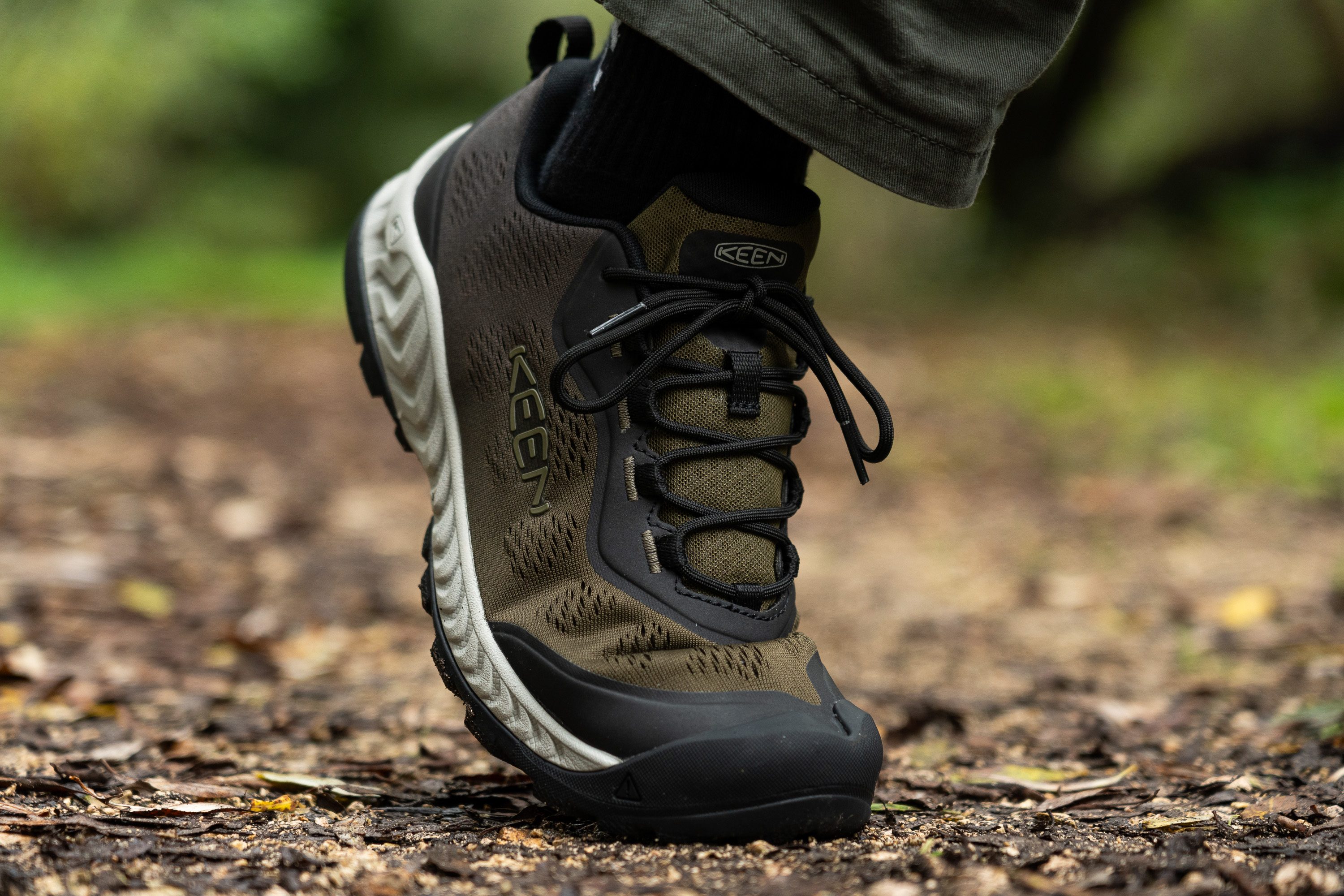
Not related to the footwear, but a good indicator of how we treat things we own, is this tidbit from Arc’teryx (climate report 2022), which claims we can extend garment life by 32% with proper maintenance!
Durability and sustainability: we can’t have it both (yet)
We also have to talk about the relationship between durability and sustainability. One study (Osei, 2024) has clearly highlighted that while biodegradable running shoes have 34% lower carbon emissions and lower fossil fuel dependence compared to conventional synthetic shoes, they also use more water and agricultural land, and they are less durable. On top of that, they can achieve 94% decomposition under industrial conditions, but in real life, the number is significantly lower, only 31%. This also means that biodegradable shoes are dependent on proper waste management infrastructure.
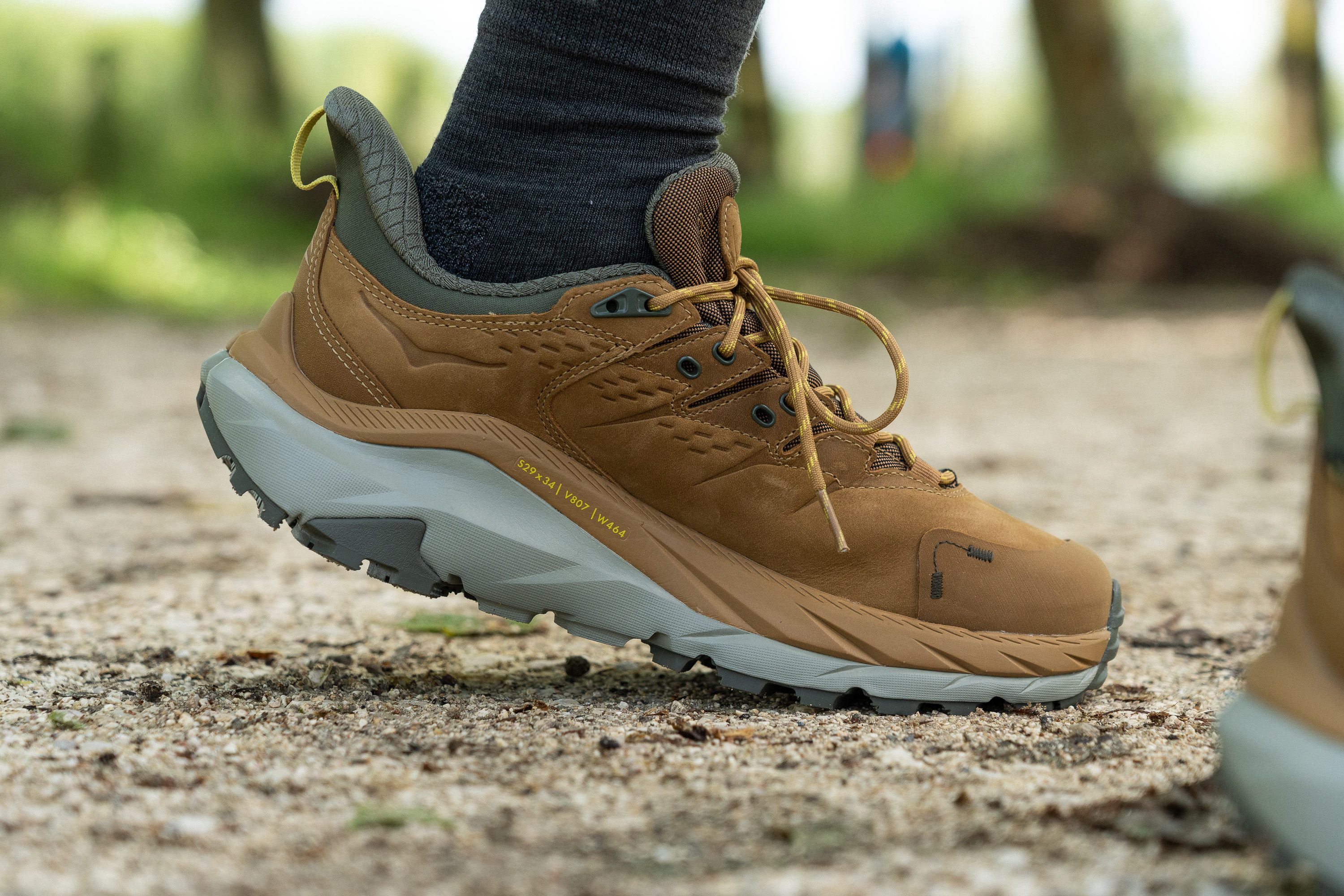
Some brands may highlight that their footwear is sustainable, but if we want to dive deeper and not succumb to greenwashing, we’d better look deeper into the production process and the product overall. Were sustainable/recycled materials used? How long is the footwear predicted to last (and how close to reality is that prediction)? Is the brand committed to fair wages? Does the brand offer to repair your shoes, resole them, or recycle them? What’s the packaging like? Are there any data on the brand’s website regarding their carbon footprint, material sourcing, and greenhouse gas emissions?